
What a renovation actually feels like — and how to get through it
There is a version of renovation content that makes the whole process look effortless. Beautiful before and afters, a few weeks of mild inconvenience, and then a dream home reveal. What most of that content skips entirely is the part where you are living through it — the dust in your cereal, the noise, the people coming in and out of your home, the moment mid-demo that makes you question your decision to renovate, and the very specific exhaustion of making a hundred decisions while also trying to live your regular life.
I renovated my own home and learned most of this firsthand. I am sharing them with you in this post — the practical realities and the emotional ones — to empower you to go into this with your eyes wide open.
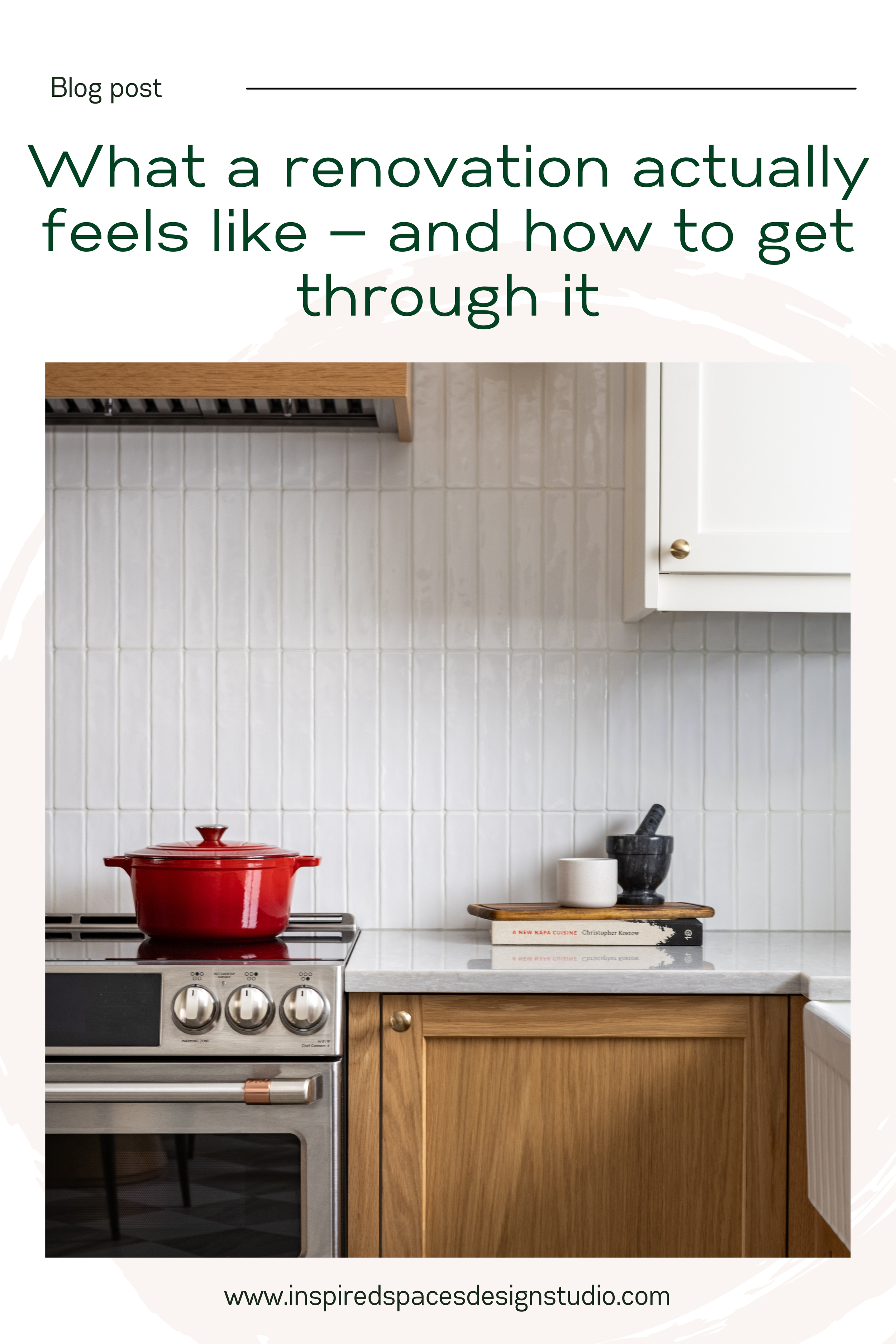
Make your decisions before build starts, not during
Most renovation stress does not actually come from the build itself, but from the countless decisions that come along with it. Being asked to choose tile the day before it gets installed, or realizing the island is too big after the plumbing is already roughed in, every decision made under pressure on site is a decision made without the full picture and you will feel that in the result.
The solution to this is a proper design phase before a single wall gets touched. When your layouts are finalized, your materials are specified, and every choice has been made on paper first, your contractor can focus on building instead of waiting on you and it makes the whole process calmer for you.
Create a temporary version of every space you're losing
This one sounds obvious until you go three weeks without a kitchen and are eating cereal in your car. Before demo day, think through every space that will be disrupted and set up a functional temporary version of it. For my kitchen renovation, I set up a temporary kitchen in the garage — coffee maker, microwave, old kitchen fridge became the garage fridge, and a surface to work on with a plug in induction cooktop. Dishes would be hand washed in the laundry room sink. It was not pretty but I made it as functional as I could, and this matters more than you think when you are already dealing with everything else a renovation throws at you.
Do the same for your laundry situation, your bathroom if it's being touched, any area of your home that affects your routine. A little planning before you start renovating goes a long way toward keeping your household running while the work happens around you.
Make freezer meals that are easy to reheat
One thing that made a real difference for us was meal prepping before demo day. In the weeks leading up to the start of the renovation, I cooked and froze as many meals as I could — soups, stews, casseroles, anything that reheats easily in the microwave, Instant Pot, slow cooker, or air fryer. It sounds like a small thing but cooking full meals in your temporary kitchen won't be practical and it can turn into a real frustration. It is easy to turn to takeout meals and this can add up quickly. Takeout every night for four to six weeks is an unplanned expense on top of an already significant renovation budget, and decision fatigue is real. The last thing you want to think about after a long day of renovation chaos is what's for dinner. Having meals ready to pull from the freezer meant one less thing to manage during an already overwhelming period. If you have the time to do it, I cannot recommend this enough.
The dust will get everywhere — and I mean EVERYWHERE
This is the one that you might think you understand well, but really don't until you experience it. Renovation dust is not the same as regular household dust. It is fine particulate that travels through closed doors, settles inside drawers, coats your dishes, and finds its way into rooms that had nothing to do with the renovation. It is relentless and it will test your patience in ways you did not anticipate. It will be significantly worse if you have allergies.
Invest in proper plastic sheeting and tape off doorways to the areas being worked on, cover your vents so dust does not travel through your ductwork, and anything precious — artwork, collectibles, anything sentimental — should be boxed up and stored safely for the duration of the renovation. For allergies, consider wearing a mask while you are inside. And accept, from the beginning, that your home will not feel like your home for a while. That is part of the process, not a sign that something has gone wrong.
Prepare yourself for the emotional weight of seeing your home broken apart
There is a period in almost every renovation, usually somewhere in the middle of demo, where everything looks significantly worse than when you started. The walls are open, the floors are gone, nothing is recognizable, and the vision you had feels very far away. This is completely normal and almost universal, but almost nobody talks about it. If you can afford to move out temporarily during this phase, seriously consider it and budget for it if you are able to — living in a construction zone is physically uncomfortable and emotionally draining in ways that are easy to underestimate until you are in the middle of it. This is also where having a designer makes a quiet but meaningful difference. You are not holding the vision alone. Your designer holds it with you, keeps the plan intact, and can remind you of what is coming when the middle part feels impossible.
Set a realistic budget — and then add 20%
Unexpected costs are not the exception in renovations, they are the rule. What you find when we open your walls, discontinued materials, back-ordered fixtures, supply chain delays — these things happen on almost every project. The 20% buffer is not pessimism, it is preparation for the unknown. It is just how renovations actually work, and going in with that expectation means you will not be derailed when something comes up.
Hire the right people — and bring your designer in first
When renovating, most people call a contractor first. It makes sense — the contractor is the one who does the work. But the order of hiring matters more than most people realize. Your designer should come in before your contractor does, because the contractor needs the design to do their job properly. A clear set of drawings, material specifications, and a defined scope means your contractor can give you an accurate quote, build an honest timeline, and get to work without spending the first few weeks figuring out what they're actually building.
A good designer does not disappear after the drawings are done. They stay involved, keep the project on track, and make sure what gets built matches what was planned. They will also help you navigate the process as well as help you stay organized, because managing the relationship between the design intent and what gets built is part of the job.
Your schedule will be more affected than you expect
Trades arrive early, deliveries need to be received, and decisions come up in real time that need your input. If you are working through a renovation, build buffer into your personal calendar and know your non-negotiables from the start. Your designer will help you navigate this and manage communication with your contractor and deliveries so that scheduling is done around your availability and constraints.
Protect your mental health deliberately
Renovation fatigue accumulates over time, even when things are going well. The sustained disruption to your home and your routine takes a toll and you may not even realize it until it bleeds into other parts of your life. Try to keep one room in the house completely untouched as a refuge that feels normal when everything else does not. Take breaks from being in the house, go for a walk, have dinner somewhere that is not a construction zone, take a weekend away during an especially intense phase if you can manage it. Give yourself permission to not talk about the renovation for one evening — it will still be there tomorrow.
Keep the vision alive
There will be at least one moment where the end feels impossibly far away and you start quietly questioning every decision you made. Come back to your inspiration images, your mood board, your material selections — keep them somewhere visible so the vision stays real. Talk to your designer if things feel to overwhelming and celebrate the milestones along the way: demo complete, structure done, drywall up, the first of your beautiful new tiles installed. Each one means you are closer to the home you planned. You just have to get through the middle to find it.
Renovation is one of the most disruptive things you can do to your home and your life. It is also one of the most worthwhile. The difference between surviving it and being broken by it usually comes down to preparation, the right people around you, and knowing what is coming before it arrives.
If you would rather not navigate it alone, that is exactly what I am here for. Book a design consultation and let's talk about your project — I design and manage renovations end to end, so you can focus on the exciting part instead of managing all the moving pieces yourself.